IBM Launches New Quantum Computing Chip, Aims for Commercial Use by 2025

Editor
. 2 min read
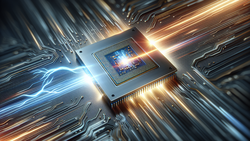
IBM unveiled its latest quantum computing chip, the 'Quantum Heron,' on Tuesday, marking a significant advancement in quantum technology. The chip, featuring 133 qubits, is set to target commercial applications by 2025. Dario Gil, IBM's Senior Vice President and Director of Research, presented the chip at the company's research facility in Yorktown Heights, New York.
Quantum computing's potential to solve complex problems faster than classical computers is why this development matters. Unlike traditional computers, which use bits, quantum computers utilize qubits that can represent multiple states simultaneously. This allows them to process a vast amount of information concurrently, a capability that IBM aims to harness for industries such as pharmaceuticals, logistics, and finance.
Gil emphasized the chip's potential impact: > "This chip marks a pivotal step toward practical quantum computing for industries." IBM's Quantum Heron represents a leap from previous models, which had fewer qubits. The increase in qubit number enhances the chip's computational power, making it more viable for solving real-world problems.
The development of the Quantum Heron chip involved extensive research and innovation. IBM has been a leader in quantum computing, and this new chip reinforces its commitment. The enhanced qubit count and improved error correction mechanisms are particularly noteworthy. These advancements could bridge the gap between theoretical quantum computing concepts and practical applications.
For stakeholders, this development signifies a potential shift in computing paradigms. Industries reliant on complex computations could see substantial benefits. Pharmaceutical companies, for instance, might use quantum computing to accelerate drug discovery processes. Similarly, logistics companies could optimize supply chains more efficiently. This could lead to cost reductions and enhanced service delivery.
IBM's journey with quantum computing began decades ago. The company has consistently pushed the boundaries, leading to breakthroughs like the IBM Q System One, the first integrated universal quantum computing system. The Quantum Heron chip builds on this legacy, setting the stage for practical quantum applications.
As IBM moves toward its 2025 goal, the tech community will closely monitor how the Quantum Heron performs in real-world scenarios. The company's success could spur further investments in quantum computing, prompting other tech giants to accelerate their efforts.
Sources

More Stories from
Microsoft Partners with NVIDIA to Launch AI-Powered Cloud Computing Platform
Microsoft and NVIDIA have announced a partnership to develop a new AI-powered cloud computing platform, Azure AI Foundry, aimed at enterprise clients. Satya Nad

Nvidia’s Latest AI Chip Promises 30% Faster Performance for Machine Learning Tasks
Nvidia's H200 chip offers a 30% boost in AI performance, shipping Q4 2024.
Nvidia’s New AI Chip Delayed Due to Design Flaws
Nvidia delays Blackwell AI chip launch due to design flaws, affecting Amazon, Google, and Microsoft.

MIT Researchers Develop Machine Learning Algorithm to Predict Battery Life with 95% Accuracy
MIT's new AI predicts battery life with 95% accuracy, transforming industry standards.

Microsoft Invests $1.5 Billion in AI-Powered Cloud Infrastructure for Enterprise Solutions
Microsoft invests $1.5 billion in AI cloud infrastructure, boosting Azure's enterprise solutions.